Cortex’s Thought Assistant hits the Market

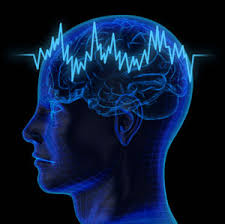
After decades of research and even longer sorting out data protection issues and fail-safe protocols, Cortex has launched their thought assistant across the planet. With a small implant in the pre-frontal cortex of the brain, anyone can now think a request for information which is then fed back to them with associated images pushed to the back of the retina.

This means that anyone can now engage in a boring conversation with another person or group of people, and not only think about something else (as they invariably do now and have done for centuries) but find answers to anything they need to know whilst wasting their time with people they don’t really want to be with.

Cortex has announced the innovation as the ‘Ultimate in Multi-Tasking’ and claim that the use of the ‘InterMix’ thought assistant will help busy professionals maintain a proper balance of social interaction with their friends and close relatives whilst coping with the pressures of work.


RickRock Persona Retired – Rumours of Inappropriate Thoughts

RickRock, Earth’s highest-paid Airstar and a central character in blockbusters like Alien Expansion and Black Hole Enchantment, is in the news again. This time, his persona, on show at multiple shopping outlets, has been accused of inappropriate thinking towards shopping avatars.

Rick and his representatives issued a denial that the Persona’s thinking was in any way linked to Rick’s. Whilst investigations continue, Rick’s management team have pulled all Persona’s from public places. Neurowall, the programmers of Rick’s Persona, have declined to comment.

RickRock’s latest AirFeature, Dandelions in Nebulus 70, remains on schedule for release in early 2225.

New Avatar-less Hovercars to be Tested

Fed up with your Avatar and the droning voice giving you constant updates on your journey? Well, worry no more – from 2230 the Dominion of Old Europe has sanctioned the use of aircast versions of ourselves that we can control to drive our hovercars. So in the not too distant future, if you get annoyed with the chauffeur, you will actually be getting annoyed with yourself.

Naturally, the use of what are to all intents and purposes exact copies of ourselves brings personal security risks. However G-Soft, who is leading this development (like every other development…) have assured the Dominion that the aircast MeDrones will be totally secure from hackers. Like their computers are, right?


G-Soft Computers

In the 23rd Century, G-Soft is mega. Massive. This corporation makes almost everything that drives the technology used for communication, collaboration and a whole host of domestic activities as well as for living and working in outer space. No 0ne really knows who owns G-Soft anymore. Its owner or owners are very private and quite mysterious individuals. The last known image of the G-Soft President is over 15o years old now. Presumably, that President has passed on but no one has a clue who the existing President is. They are just known as President G-Soft and he or she periodically makes audio-only aircast announcements about latest advances in their products. This, of course, drives various power mad Presidents of countries and other large corporations to periodically rant about the G-Soft President and blame him or her for all sorts of ‘ills’ that affect the World and indeed the wider Universe.

I remember when I earned my Digital Badge for the History of Digital technology I learned about G-Soft. If I remember correctly, in the early 21st Century the kind of service and software areas that G-Soft now monopolises were shared between 3 large companies. One I know was named after a fruit – it might have been the Banapple, one of the first hybrid fruits loved across the Earth. Then another big company definitely had ‘Soft’ in its title, might have been Gatesoft or Megasoft. The third big player at the time was called Dongle (but some friends have told me this used to be a device and that the real name of the company was Noodle). Wish I’d paid more attention when attending Junior Virtual.

Anyway, what I do remember is that all three of the big players, Banapple, Mega-Gatesoft (or whatever) and Noodle continually outdid each other with advances in their communication and collaboration tools. Then, one of them (and again not sure which one) patented ‘ThoughtPlay’ which revolutionised the way that users could interact with their communication devices. That company bought up the other two for mega-bucks and G-Soft was born.

Time Miner

In the late 22nd/early 23rd Century, interest in being able to make use of time had blossomed. Early experiments conducted by President Professor E. Poch in the mid-22nd Century had demonstrated the principle of ‘capturing’ time from the edges of black holes.

However, various issues led to Professor Poch’s experiments being suspended. First of all, too many of the spaceships used to extract the time wound up being dragged into the black hole or enveloped in lethal gases from black hole ‘burps’. Secondly, the small amounts of time that were captured by these early experimenters couldn’t be used in an even vaguely controlled manner.

It was only in the 2190s when the first time battery was developed that it became possible to store and the discharge, with some control, packets of time. However, packets of time are notoriously unstable and managing them is as much an ‘art’ as a science. Only a small handful of individuals study time mining as the dangers that confront a trained time miner at work are so great. Statistics show that only one in twenty time miners live into their thirties though in many cases, rather than definitively dying, they simply disappear.

Clone a Cat

ClonaCat was founded around 2110 by Tjoorbaert Morabitz, at the time the World’s most famous genetic engineer. Tjoorbaert was also a massive cat lover and believed that other people like him would pay small fortunes to have their beloved pet cats cloned and re-created after death. Tjoorbaert was certain that he could do far better than earlier experiments at domestic pet cloning that had not quite fulfilled needs.
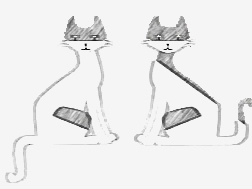
However, just like the early experimenters in this niche market, Tjoorbaert found that the cats he created were never totally the same for the owners as the pets they had just lost. ClonaCat was looking like a failed enterprise until fortuitously, scientists working there on the horse genome, reactivated some ancient genes and created the first unicorn on Earth. This led to a whole new sports activity, unicorn racing, and ClonaCat became a prosperous concern through the selective breeding of unicorns for racing purposes.

The income from their unicorn ‘arm’ enabled Tjoorbaert to continue his research into the domestic cat genome, work that was accelerated by the arrival of a cat called Azz-leX. This cat appeared to Tjoorbaert literally out of the blue one evening (well appeared on his doorstep anyway) and turned out to be the ‘perfect’ cat with an incredible IQ. Not only that, but Azz-leX also provided humanity with the Azz-leX transposon, the cure to the DSR virus that had started to devastate the human population around 2170, near the end of the first interstellar war with the Mud Lizards.

ClonaCat ceased to trade in around 2180, being subsumed by CloneMate, another major cloning company of the time. CloneMate then used the expertise that ClonaCat scientists could bring to make the first generation of rubanon based artificial intelligences (AI’s). Cat, the Inspector’s companion, was the first off the production line and the only output from CloneMate that held a completely expressed copy of Azz-leX’s genome.

eMDaDD

What does eMDaDD stand for? I had no idea myself until Cat told me it was Electronic Matter Dissolution and Display Device. What a mouthful!. Anyway, an eMDaDD is basically a system that can move inanimate or animate objects from one physical location to another in a flash. Well, actually there is no flash as such – it is just quite quick.

On Earth in the early 23rd Century, a system called Fastmove had been developed.  Stimulated by a 20th Century sci-fi series which I believe was called Star Trick (well that’s what it says on Cosmopedia), though Cat maintains it was called Star TREK (but what does he know?). Anyways, Fastmove on Earth never really got perfected. In fact, it turned out to be unusable. Tested on humanoid robots and laboratory animals, one could never be certain that all limbs and other body extremities would re-materialise in the same place as they were originally on the object being moved. Naturally, humans (and especially politicians) were not too keen to use this technology if there was a chance their backside could re-appear where their elbow used to be.

Enter the Mud Lizards, who I’ve always considered to be a bunch of basically quite ‘thick’ lizardy type things. Turns out they’re quite smart and developed a device with Fastmove capability. Not only that but, as their dastardly plots show in our adventures, they also added to Fastmove the capability to change the shape of an object so that it closely resembled another. In the most extreme case, a Mud Lizard is able to re-materialise in almost perfect human form. Only when the Mud Lizard in human form flicks out its slimy tongue and grabs you sloshily by the throat do you realise that you are not face to face with a fellow being.

What slimeballs these Mud Lizards are!!!!

Hovermodule

Ever since normal cars were finally banned in around 2032 due to every national leader finally accepting that global warming due to fossil fuel use was real, there had been an urgent need to find alternatives. Even the USA finally banned petroleum engine cars though one of their former Presidents (I think his name was Ronald Tramp or something like that), on his deathbed, tweeted that the USA was succumbing to a Chinese/North Korean plot.

Anyways of course at the time there were electric cars but these simply did not provide those who really liked to rush about (e.g. Presidents, movie stars (as they were called at the times) or the idle rich (as they are still called in the 23rd Century) with the thrill of fast movement.

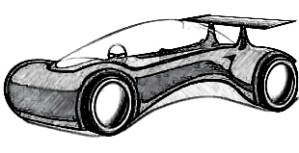
It was only when SCSM (super conducting – super magnet) technology was perfected and became affordable in around 2030 that essentially flying cars became real. The so-called Hovercar or Hovermodule quickly became the way to travel, finally leaving good old Mother Earth roads to cyclists. This was just as well as by this time most roads had so many cycle lanes that average car travel speed in towns was a measly 5Kmh (except in the UK where they still used Mph having finally left Europe in 2072). In fact since 2025 all new roads had been built with more bicycle lanes than car lanes. All new cars from 2025 had to have special rubberised coatings that cyclists could bounce off if they accidentally hit a car as they overtook on the inside or outside. What a relief it must have been for car drivers to leave the ground and be able to drive in relative safety.

Feelplay

No!!. In the 23rd Century Feelplay is not a condom. It’s an entertainment technology. Condoms were replaced a long time ago with some peppermint flavoured spray you squirt on your to tongue each month to prevent conception if so desired.

Feelplay was the obvious extension of Airplay. Airplay technology had allowed humans to ‘think’ the music of their favourite artists and images of their favorite movies or plays inside their head but Feelplay gave the extra added bonus that you could actually sing on stage with your favourite Airstars or act with your favourite actresses or actors. You could even create your own storyline with Feelplay(if you were in a movie or play) to suit your mood or desire to be a hero or a baddie for example.

Feelplay was, however, even in the late 23rd Century, a premium service that was generally only affordable for the extremely well off (normally airstars strangely enough…..) although there were various pirate services that could be accessed if you knew how. Not that I do know how though the best one can be accessed at Feelplayed123.cosmos………

Sonic Radar

Cat had many technologies to call on in his role of protecting me from all manner of dangers. He was pretty rubbish in my view at this protection malarky and always seemed to leave it to the last minute to grab me from the jaws of disaster. I think he enjoyed doing that (leaving it to the last minute that is!!).

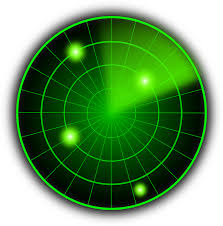
image of radar screen

Anyway, one tool he had which was generally very useful, was his highly sensitive sonic radar. Unlike normal radar that detects objects and their movement, with sonic radar, Cat could also detect sounds very accurately. This basically meant that he could detect the smallest of objects easily, even if they remained totally motionless.

He often remarked that he always knew where I was because he could readily lock onto my brain, despite its size…….. cheeky little automaton!!